
Bringing the Last Hostage Home
This week as we read Parashat Beshalach (Exodus 13:17 to 17:16), we see a profound parallel between the eternal words of the Torah and the bittersweet redemption unfolding before our eyes.
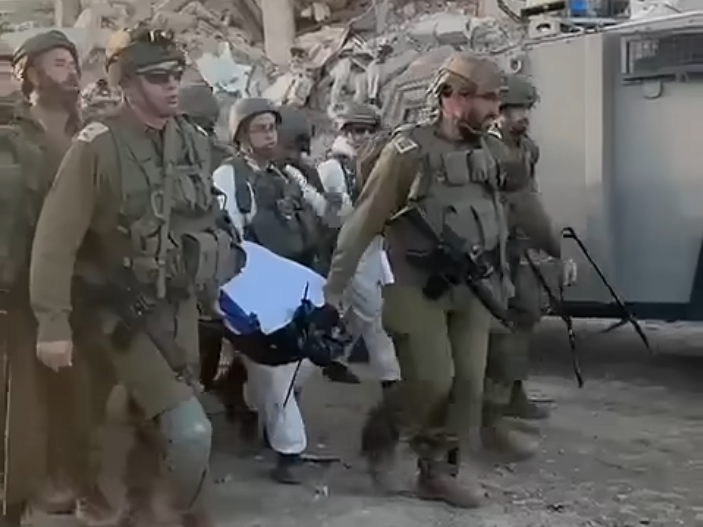
 On Monday, January 26, 2026, after 843 days of unimaginable anguish, the remains of Master Sergeant Ran Gvili were recovered.
He was the final hostage whose body had been held in Gaza, and he was brought back by the Israeli Defense Forces during a large-scale operation in northern Gaza City.
This 24-year-old hero was a tactical officer in an elite police unit. He had rushed from his recovery bed while healing from a fractured shoulder straight into the inferno of October 7 to defend Kibbutz Alumim.
He fell in battle, and his body was taken into Gaza. Now, at last, he has been brought home to the Land of Israel for burial in his hometown of Meitar.
The Promise of Joseph
This event powerfully echoes the opening of this week’s Torah portion.
As the Children of Israel flee Egypt, the Torah pauses to record a specific detail:
“And Moses took the bones of Joseph with him, for Joseph had made the Children of Israel swear, saying: ‘God will surely take notice of you, and you shall bring up my bones from here with you'” (Exodus 13:19).
 Joseph rose to power in Egypt but never forgot his heritage. He insisted on this oath from his brothers.
Centuries later, during the Exodus, his promise was fulfilled. His remains were carried out of the foreign land and eventually buried in Shechem, in the heart of the Land of Israel.
The Holiness of the Land
This act was more than a logistical detail. It embodied the unbreakable covenant between the People of Israel and our holy land. We see this same urgency with our patriarch Jacob. Before his passing, Jacob pleaded with Joseph:
“Do not bury me in Egypt… Carry me out of Egypt and bury me in their burial place” (Genesis 47:29 to 30).
Why was there such insistence on this? Our Sages teach that the holy soil of Israel possesses a unique spiritual power.
Drawing from the verse, “He will make atonement for His land, His people” (Deuteronomy 32:43), the Talmud explains that burial in the Land serves as an atonement (kaparah) that purifies the soul (neshama).
The holiness (kedusha) of the ground facilitates a deeper connection to the eternal promise. This makes burial in Israel a final act of closeness to God.
A Modern Mirror
The return of Ran Gvili from Gaza mirrors the departure of Joseph’s bones from Egypt. No Jewish soul, whether living or fallen, belongs captive in enemy territory or foreign earth. This act fulfills our sacred obligation and signals God’s ongoing remembrance of His people.
With all hostages now home, whether living or deceased, let us draw strength from these Torah parallels. Just as God redeemed us with an outstretched arm and carried our ancestors’ remains to freedom, may He speedily bring the complete redemption (geulah).
May we reach a time where every Jew rests securely in our holy land and peace endures under His protection.
 Shalom and Blessings for Peace from Jerusalem,